
With Harvest

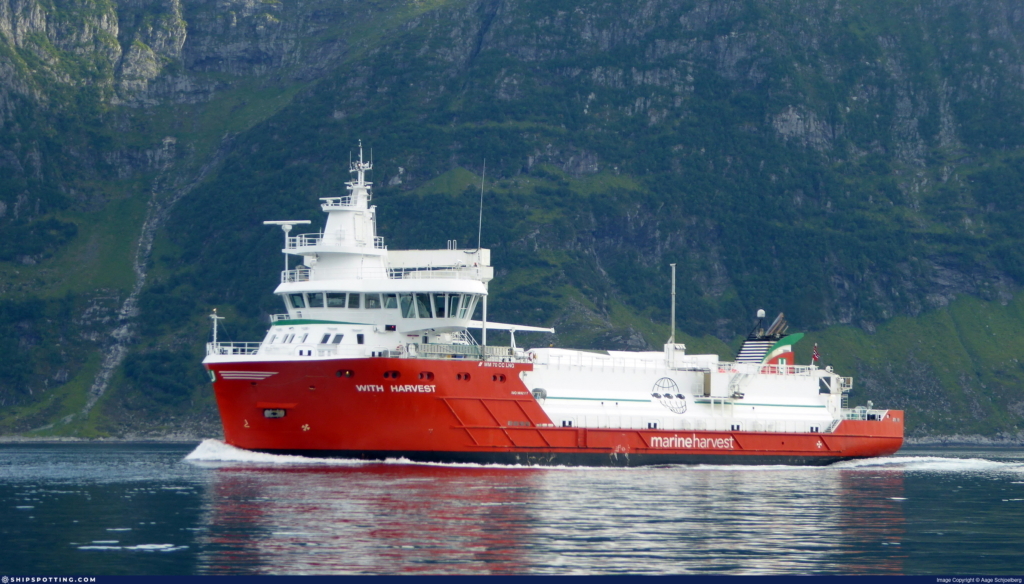
Delivered in 2014 by Fiskerstrand Verft, With Harvest was recognized for high-capacity coastal bulk transport. Developed for long-term commercial service along the Norwegian coast, the vessel combines substantial cargo volume with advanced LNG propulsion, delivering both operational capability and environmental performance.
Although seen as a specialized bulk cargo carrier, With Harvest is described as the world’s largest fish feed vessel. Moving high volumes of dry cargo efficiently between production facilities and distributed coastal destinations, she operates as an integrated part of a commercial logistics chain. Her scale and cargo handling performance place her among the most capable vessels of her size segment.
Key Facts

Reliable Propulsion Under Varying Conditions
With Harvest is powered by a Bergen C26:33L9P gas engine delivering 2,430 kW. The LNG-powered propulsion system ensures stable torque output and smooth response across changing load profiles.
The integration of a large controllable pitch propeller, powerful bow and stern thrusters, and a Kongsberg DP system provides precise station keeping during discharge operations. This capability is critical when transferring bulk cargo in exposed coastal environments where accuracy and reliability directly influence operational safety and efficiency.

Designed for Commercial Integration
With Harvest was conceived as part of a larger logistics chain linking shore-based production facilities with distributed coastal delivery points. The vessel’s cargo system was developed to integrate seamlessly with land-based processing infrastructure, ensuring efficient transfer between factory and vessel without unnecessary handling stages.
Her design prioritises minimal environmental footprint to both air and sea, while maintaining the robustness required for continuous commercial service. The LNG propulsion system significantly reduces emissions compared to conventional diesel solutions, while the gas-electric configuration supports efficient power distribution throughout the vessel.
At a service speed of approximately 13 knots when loaded, the vessel balances cargo capacity with operational flexibility, enabling predictable scheduling across demanding coastal routes.
Contact us
Please fill in your contact details below and we’ll reply as soon as we’re able.

Contact us
Please fill out the enquiry form, and our dedicated team will promptly attend to your request