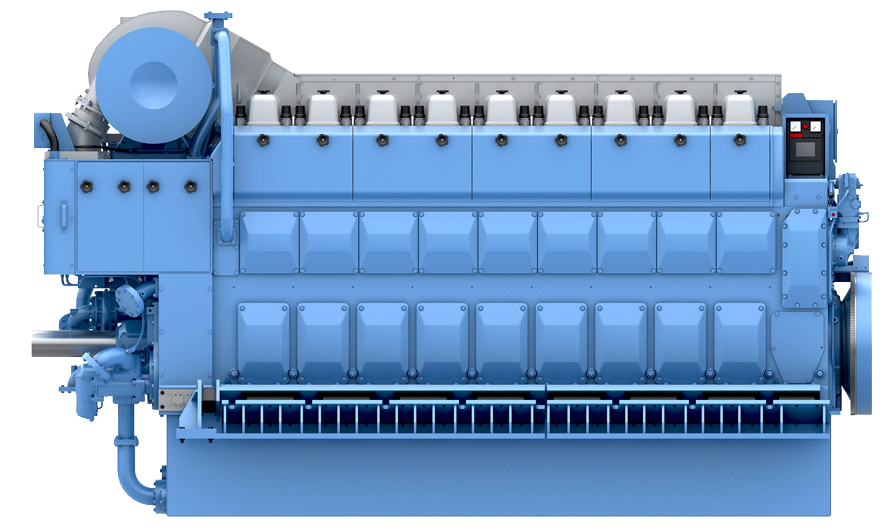

B33:45L
Liquid Fuel | 3.5 - 5.4MW


With over 100 years of experience in the fishing industry, Bergen Engines have a reference list of nearly 200 engines built for commercial fishing needs. Headquartered in Norway, the fishing industry is an important part of the country’s culture and our experience.
At Bergen Engines, our offering strikes a perfect balance between power and fuel efficiency, resulting in significant cost savings and improved profitability for our customers. The reliability of our engines is unmatched, ensuring that your vessels can withstand the challenging offshore conditions and maintain peak performance, reducing downtime and increasing productivity.
The adaptability of medium-speed engines allows them to seamlessly support various fishing techniques and this versatility allows you to fine-tune your operations for maximum catch rates. Furthermore, their reduced emissions and environmentally friendly profile align with the growing focus on sustainable fishing practices. By choosing Bergen Engines, you not only enhance your fleet’s efficiency but also contribute to the responsible management of marine resources.

When MS Knester left Karstensens Skibsværft and began fishing operations in 2025, it quickly delivered one of the most notable starts in recent years: 385 tonnes of mackerel on its first trip. Two voyages later, the total reached 565 tonnes, with no reported commissioning delays or propulsion issues.
Propulsion is built around a Bergen B33:45L9P main engine rated at 5400 kW, selected for efficient towing power during trawling with steady low-RPM purse seine operations. Long service intervals, responsive load characteristics and low vibration were key factors in the selection, with a SCR system from GESAB providing Tier III compliance.
The engine drives a Brunvoll Volda CP95/4 controllable-pitch propeller via a two-speed ACG980/PS750 gearbox, offering flexibility across fishing modes and weather conditions. A 3200 kW Marelli shaft generator supplies electrical power. Together, the system delivers high bollard pull, controlled RPM, and efficient steaming.
Deck layouts follow the standard Karstensen arrangement, with trawl winches aft, purse seine equipment forward, and an efficient sequence from pump-off to RSW intake. The vessel maintains full redundancy through two auxiliary generator sets, supported by a complete power management system.
Fishing companies typically expect a tuning period as crews adapt to a new hull and propulsion arrangement. According to the shipowner, the Knester required none. Multiple test trawls and net trials were completed without interruption, and the vessel immediately delivered strong catches.
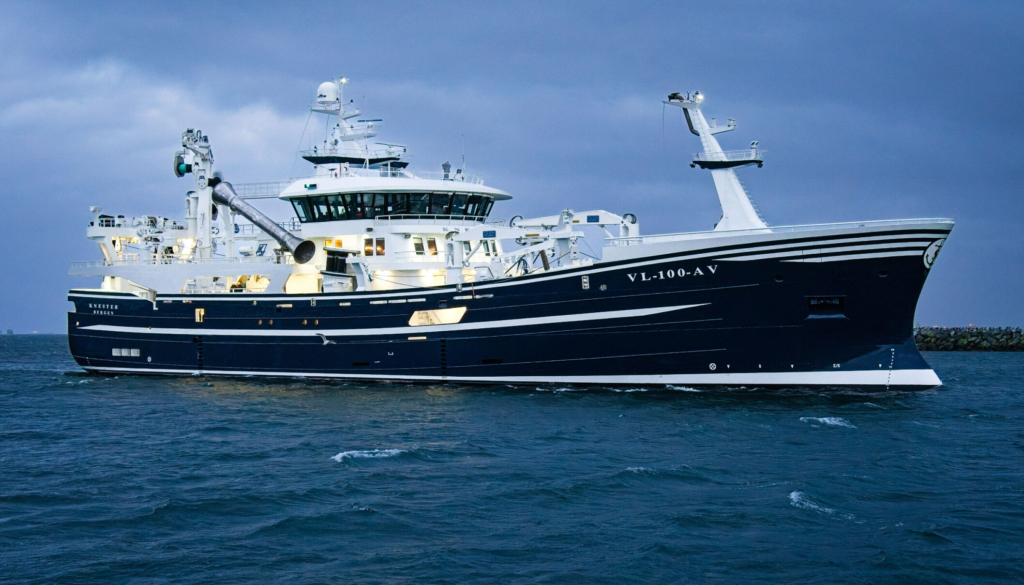
The purse seiner/ pelagic trawler, Knester.

Designed and built by Karstensens Skibsværft, the trawler operates in both purse seine and pelagic trawl modes. Its construction includes high-capacity refrigerated seawater (RSW) tanks and a layout optimized for fishing operations in the demanding North Atlantic and surrounding waters.
Ownership by Framherji P/F reflects their ambition to maintain efficient, modern, and environmentally sensible fishing operations. The vessel’s design ensures it can deliver on both catch volume and operational sustainability.
At the core of Høgaberg are two Bergen B33:45L6P main engines, each rated at 3,600 kW. These engines were selected to match the vessel’s dual-mode operations, providing both towing power for trawling and sustained output for purse seining. Bergen’s B33:45 series is known for long service intervals, solid build quality, and dependable operation; all critical for a vessel that must operate efficiently throughout varying conditions.
Electric power on board is managed through a hybrid system. Høgaberg carries a 1,100 kWh Corvus Orca battery, which works alongside two Caterpillar gensets to support energy-intensive operations, particularly during winch-intensive fishing periods.
Classed as Ice-C under DNV +1A, the Høgaberg is built to operate in cold and potentially icy waters. This class rating reflects a hull designed to handle challenging sea conditions and provides Framherji with the confidence to deploy the vessel where it is most needed for pelagic fishing.
Bergen Engines play a crucial role in this resilience: the dual-engine setup ensures load sharing and redundancy, and the clean, stable power delivery supports long-haul fishing trips reliably.
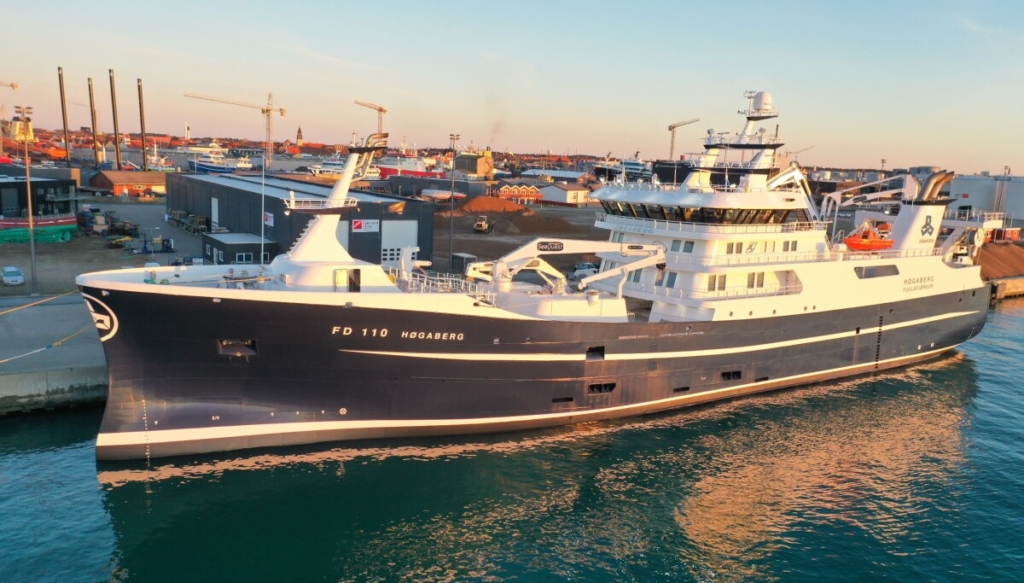
The purse seiner/ pelagic trawler, MS Høgaberg.
Medium-speed engines play an increasingly vital role in powering the modern aquaculture fleet. As the industry evolves, operations are moving beyond traditional coastal farming toward large-scale offshore installations and advanced on-land facilities. This shift creates a growing demand for dependable, efficient, and sustainable power solutions capable of supporting a wide range of vessel types involved in feeding, servicing, transporting, and processing fish.
Aquaculture vessels today must perform reliably under continuous operation while maintaining high standards of environmental responsibility and fish welfare. Bergen’s medium-speed engines are ideally suited to these requirements, offering an optimal balance between power, efficiency, and durability. Their ability to deliver steady propulsion and electrical power ensures smooth performance for both operational and processing systems, even under challenging conditions. The engines’ low fuel consumption and future-proof solution for any fuel type contribute to more sustainable operations, while minimal vibration and noise help maintain ideal conditions for both crew and live fish.
The introduction of advanced vessel types, such as stun & bleed vessels, reflects the industry’s ongoing focus on humane and sustainable practices. By stunning and processing fish immediately after transfer from the farm, these vessels reduce stress, improve product quality, and enhance overall efficiency. Medium-speed engines support these processes by providing consistent power for propulsion, pumping, and onboard systems, ensuring reliable performance throughout extended operations.
For a seamless integration of medium-speed engines into your fleet or for more information on how our solutions can enhance the performance of your maritime operations, contact us today. Our team of experts is ready to provide insights and assist you in making informed decisions for your specific requirements.

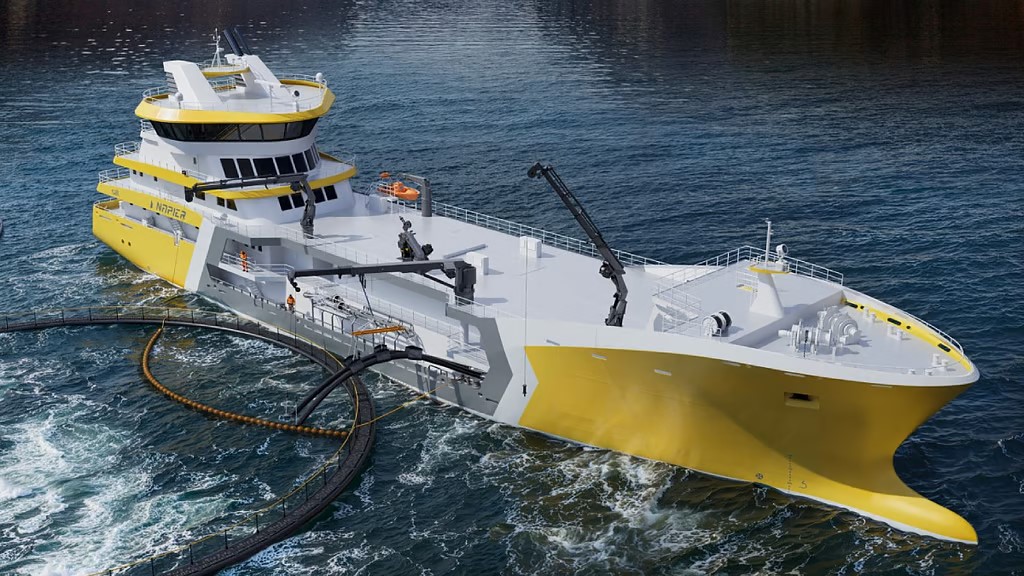
Napier’s new harvest fleet marks a major step forward for high-capacity salmon operations, enabling fast site-to-site movement, high product quality and low downtime during demanding seasons.
Tauriko, the latest and largest vessel, is designed by Salt Ship Design and under construction at Freire Shipyard. Tauroa and Tautiki established the harvesting concept, with efficient stun-and-bleed handling and controlled cooling shaping the specifications of Tauriko and confirming the value of a common propulsion platform.
All three vessels rely on Bergen propulsion; Tauriko with a Bergen B33:45L9P, and Tauroa and Tautiki with Bergen C25:33L9P engines. Napier chose to retain Bergen across all three ships because of the engine’s dependable fuel performance, stable running hours under varied loads and straightforward service routines, delivering consistent power under continuous demand.
With Tauriko now joining Tauroa and Tautiki, Napier has established a fleet designed for high-volume harvesting with a focus on product integrity, crew safety and long-term operating efficiency. Dedicated stun-and-bleed vessels have become central to modern aquaculture because they allow harvesting to take place close to the farms with tight control of welfare, hygiene and temperature. Fish are rendered unconscious before bleeding, which reduces stress and helps maintain product quality.
Each vessel reflects a clear strategy: increase capacity, enhance control at every stage of processing and rely on proven propulsion that delivers consistent performance. Bergen Engines is proud to support that strategy with propulsion solutions built for reliability in demanding marine environments.
Our engines are built with a modular design and reduced level of electronic components, avoiding complex common-rail fuel systems. This creates a robust and transparent engine solution that is easier for crews to understand, maintain and service onboard. For fishing and aquaculture operators working far from shore, often in harsh conditions and with single-engine configurations, this is critical. It enables crews to carry out essential maintenance themselves, minimizes dependence on external support, and ensures reliable engine performance when uninterrupted operation truly matters.
Have a look at our best selling engines for Fish & Aquaculture.


Please fill in your contact details below and we’ll reply as soon as we’re able.

Please fill out the enquiry form, and our dedicated team will promptly attend to your request