
Hybrid Propulsion for Spain’s Rescue Fleet

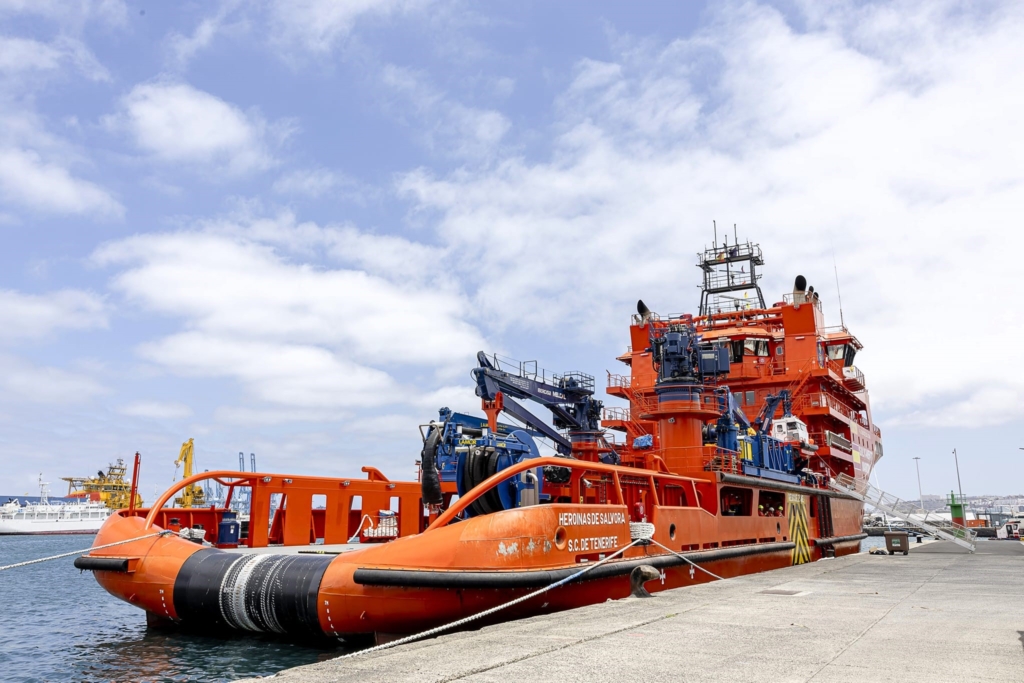
Delivered in 2024, Heroínas de Salvora strengthens the fleet of Salvamento Marítimo, Spain’s national maritime search and rescue organisation. Designed as a multi-role rescue and pollution-response vessel, it replaces ageing tonnage while introducing hybrid propulsion and enhanced environmental safeguards.
At 82 metres in length with a bollard pull of 213 tonnes, the vessel combines towing, salvage, firefighting (FiFi2), and large-scale oil recovery capability. Equipped with drones for remote surveillance and supported by DP2 positioning, it is built for complex maritime emergencies along Spain’s coastline and offshore zones.
Key Facts

Engine Reliability for Critical Operations
At the core of the vessel are two Bergen B33:45L8 medium-speed diesel engines, each delivering 4,800 kW. Designed for continuous operation under varying load conditions, Bergen engines combine rapid response characteristics with extended service intervals.

Operational Reliability
Rescue vessels operate without fixed schedules. They must change immediately between standby, towing, firefighting, and pollution response. This demands propulsion systems capable of rapid load acceptance, sustained torque, and stable performance under varying conditions.
With two controllable-pitch propellers and four electric transverse thrusters, Heroínas de Salvora maintains precise manoeuvrability during demanding operations. The hybrid configuration allows efficient low-load operation during standby while retaining full diesel power for high-demand scenarios.
Contact us
Please fill in your contact details below and we’ll reply as soon as we’re able.

Contact us
Please fill out the enquiry form, and our dedicated team will promptly attend to your request