| At Sea., Recent News
Bergen, Norway – For the first time ever, Hurtigruten’s hybrid vessel MS Richard With is sailing entirely on biodiesel, shore power, and battery energy. The groundbreaking voyage marks a historic step toward zero emission operations along the Norwegian coast.
The vessel is powered by 2 x Bergen Engines B33:45L6P, supporting the vessel’s efficient and sustainable operation. The MS Richard With is underway on an eleven-day, 5,000-kilometre journey along the Norwegian coastline, running on biodiesel made from used cooking oil originally sourced from the UK’s fish and chips industry. Together with battery power and the use of shore power in port, the ship is achieving emissions reductions close to 100%.
 (Hurtigruten’s Richard With, ©Espen Mills)
Proven Power from Bergen Engines at Sea
The vessel’s two Bergen B33:45L6P engines are designed for maximum fuel flexibility, efficiency, and future-proof solutions for any fuel type. Their ability to run seamlessly on renewable biofuels makes them ideal for projects like this one, demonstrating that the transition to sustainable shipping is possible today, using existing technology.
“This shows that the technology is already here and ready to use,” says Hurtigruten’s Operations Director Gerry Larsson-Fedde. “We don’t have to wait for future solutions to start cutting emissions.”
Hurtigruten first began testing biodiesel in 2019, but this is the company’s first voyage using 100% biofuel without any blending with conventional diesel.
Leading the Way for Greener Shipping
The initiative has been widely praised within the maritime sector. Tom Johnsen from the Norwegian Shipowners’ Association comments:
“It’s fantastic that Hurtigruten is leading the way. They’re showing that near-zero emission voyages are achievable today, cutting emissions by almost 100%.”
The success of this voyage could inspire more operators to adopt similar fuel solutions and accelerate the shift toward sustainable operations across the industry.
Important Progress Toward Net-Zero
While biofuels are seen as a transitional step, experts emphasize that fuels made from waste, such as used cooking oil, offer one of the most sustainable solutions currently available for vessels already in operation.
At Bergen Engines, we are proud that our B33:45L engines are powering this historic voyage. This project demonstrates the vital role our flexible and efficient engine technology plays in enabling cleaner, more sustainable shipping – today and into the future.
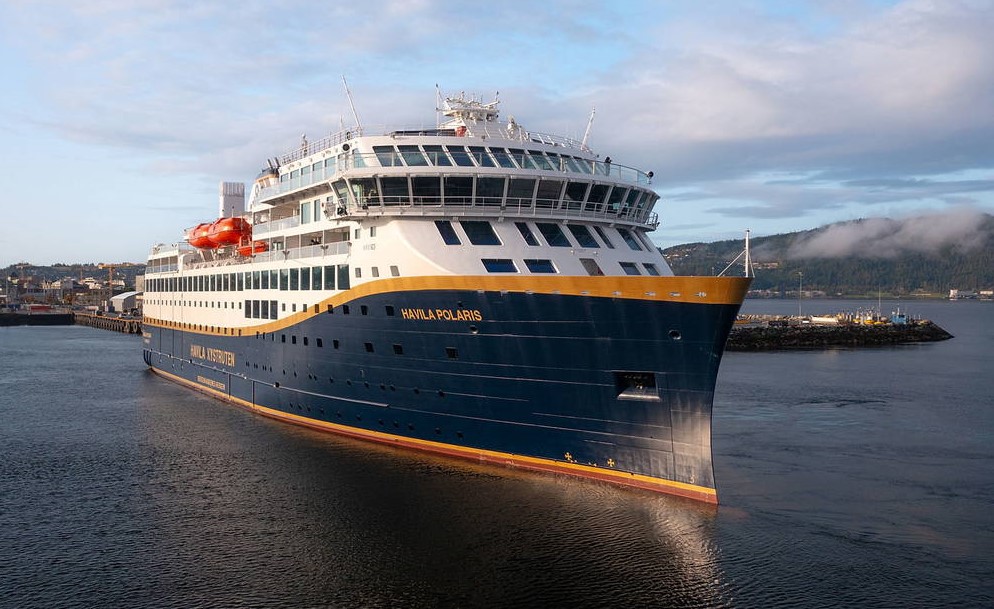 (Havila Polaris, ©Oclin)
Bergen Engines Powers Another World-First: Havila Polaris on Biogas
Similar to Hurtigruten, Havila Voyages’ Polaris is set to become the first cruise vessel in the world to complete a long-distance voyage powered entirely by battery and biogas. Equipped with 2 × Bergen C26:33L6A and 2 × Bergen C26:33L9A engines, Polaris combine electric power with renewable biogas, reducing greenhouse gas emissions by more than 90% on its 34-port Norwegian coastal round-trip.
Like the MS Richard With, Polaris demonstrates that proven Bergen Engines technology provides future-proof solutions for any fuel type, delivering substantial climate benefits today. Both projects highlight the versatility of Bergen Engines across different fuels, from biodiesel to biogas, and showcase how maritime operators can achieve low- and zero-emission passenger travel with existing engine technology.